

What Brady’s Acquisition of Honeywell PSS Means for Customers—and the Technology Market
By Joe Leucht | Director of Commercial Strategy, Hardesty Technologies
The acquisition is complete. Now the bigger question is: what does it mean for the companies that use these technologies every day?
On August 3, 2026, Brady Corporation completed its $1.4 billion acquisition of Honeywell Technologies’ Productivity Solutions and Services (PSS) business. The former Honeywell PSS organization is now part of Brady as Brady Intelligent Productivity Solutions (IPS).
For the warehouse, distribution, manufacturing and logistics industries, this is more than a change in ownership or a new logo. It brings together two significant technology portfolios: Brady’s established strength in identification, printing, labeling and safety with PSS capabilities in mobile computing, barcode scanning, RFID, voice and workflow software.
PSS generated approximately $1.1 billion in sales in 2025 and brings more than 3,000 employees into Brady.
So what does all of this mean for customers? And perhaps more importantly, what does it tell us about where the warehouse and operational technology market is headed?
For Customers, Continuity Comes First
For organizations with existing Honeywell PSS technology deployed across their operations, the immediate priority is continuity. A distribution center doesn't stop operating because the company behind its mobile computers or scanners changes ownership. Customers still have devices to support, software to maintain, spare equipment to manage and workflows to keep moving.
That means organizations currently using Honeywell PSS technologies should not view the acquisition as a reason to immediately replace equipment or rethink their entire technology environment. Instead, this is a good time to understand what the transition could mean over the longer term.
That includes watching:
- Product roadmaps
- Support and service programs
- Device lifecycle strategies
- Software development
- Integration capabilities
- New product introductions
- Channel and partner programs
- Cross-platform solutions
- Future technology investments
The immediate question isn't “Do we need to replace our Honeywell equipment?”
The better question is: “How does this change affect our technology strategy going forward?”
A Much Broader Technology Portfolio
This is where the acquisition becomes particularly interesting.
Brady already had a significant presence in identification, labels, printing, specialty materials and safety solutions. PSS adds a substantial portfolio of mobile computers, barcode scanners, RFID, voice and workflow software.
Brady itself describes the combined business as a broader industrial technology platform spanning identification, safety, connectivity and intelligent workflow solutions. That creates a much different company than either Brady or PSS was independently.
Consider what happens inside a modern distribution center.
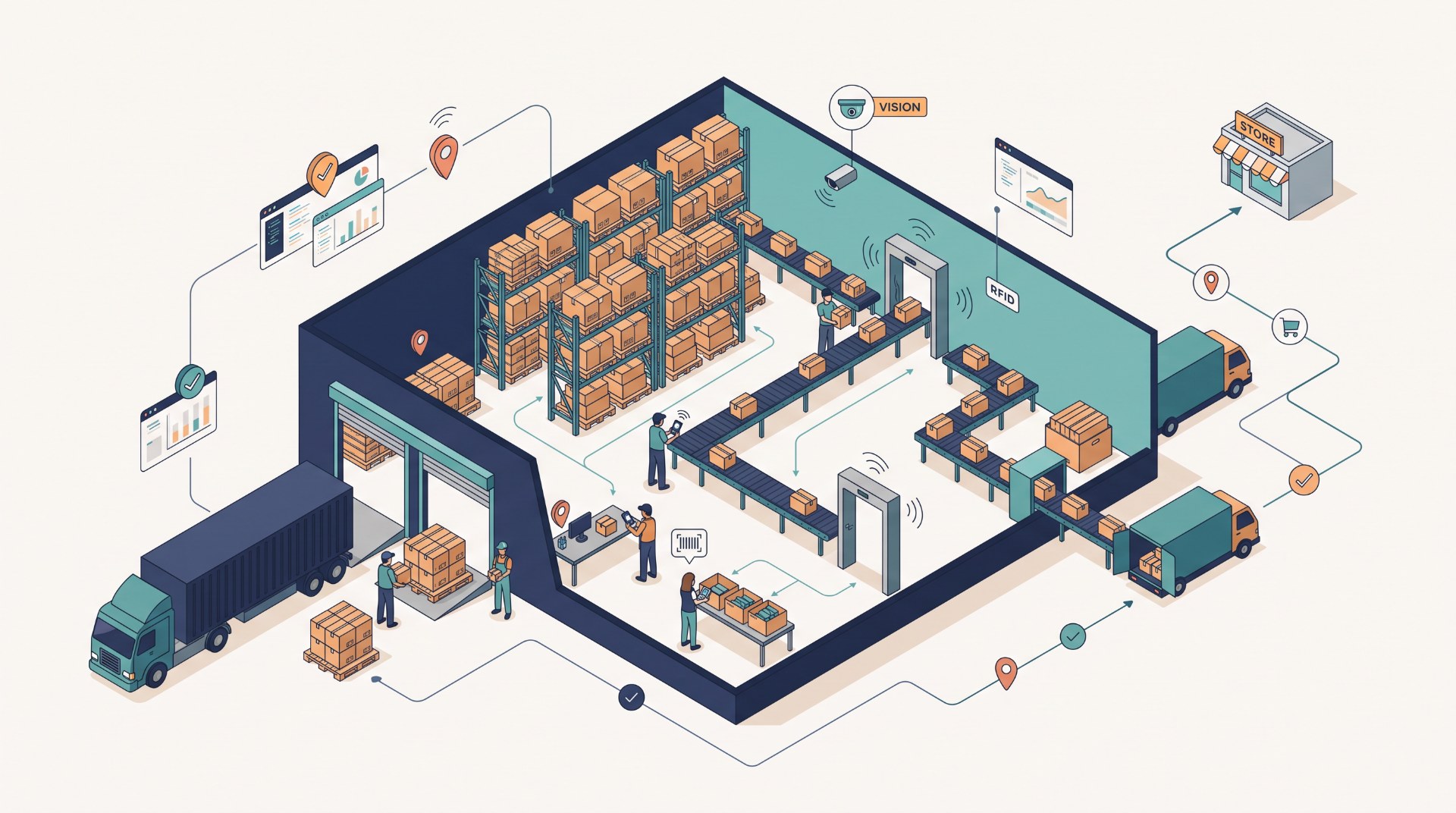
A product needs to be: Identified → received → scanned → moved → stored → picked → verified → packed → labeled → shipped → tracked
Each step can involve different devices, software, connectivity and data. Historically, customers often purchased those technologies separately. The Brady-PSS combination creates the potential to connect more of those pieces within a broader portfolio.
That's significant.
The Real Opportunity: Connecting the Workflow
The biggest potential benefit to customers isn't simply having more products available. It's the opportunity to think differently about the relationship between those products.
A mobile computer isn't just a mobile computer. It's an endpoint connected to a WMS. A barcode scanner isn't just a scanner. It's capturing information that drives a transaction. A printer isn't simply producing a label. It's creating the physical identification that allows an item, pallet, asset or shipment to move through the operation. RFID isn't simply another identification technology. It's another way to capture and communicate information about what is happening in the physical environment. And workflow software is what helps turn all of that information into an operational process.
The value comes from connecting those pieces.
That is where the Brady-PSS combination could become particularly meaningful for customers.
What This Means for the Warehouse and Operational Technology Market
The acquisition is also a signal of a broader shift taking place across the industry. The market is moving beyond individual hardware categories.
The traditional conversation might have been:
- Which scanner?
- Which mobile computer?
- Which printer?
- Which label?
- Which RFID reader?
Those questions still matter. But increasingly, customers are asking bigger questions:
How do we connect our devices?
How do we manage them?
How do we capture better data?
How do we automate the workflow?
How do we improve visibility?
How do we reduce errors?
How do we get more productivity from the people and technology already in our operation?
That is the evolution of the warehouse and operational technology market. And the Brady-PSS acquisition fits directly into that evolution. Brady now has a portfolio that reaches further across the operational technology environment, from physical identification and printing to data capture, mobility and workflow software.
Consolidation Could Change the Competitive Landscape
There is another important implication. The technology market is consolidating. Large technology companies increasingly want to address more of the customer's workflow rather than one individual component.
Brady's acquisition of PSS is a clear example.
Brady has significantly expanded its addressable market through the acquisition, with the company identifying a roughly $9 billion productivity solutions market opportunity. It also expects PSS's software and service offerings to create additional recurring-revenue opportunities.
For customers, consolidation can create advantages. A broader portfolio can mean:
- More integrated solutions
- Greater access to complementary technologies
- Potentially fewer vendors to manage
- More opportunities for standardization
- Broader software and service capabilities
But consolidation also makes independent technology expertise more important. Because having access to more products doesn't necessarily make choosing the right technology easier.
More Products Doesn't Automatically Mean Better Solutions
This is an important distinction for customers.
A broader vendor portfolio can be valuable. But customers shouldn't assume that every piece of their technology environment should come from the same manufacturer. The best mobile computer for a particular workflow may not come from the same company that provides the best printer. The right RFID solution may involve a different technology ecosystem. The best connectivity strategy may involve infrastructure from another provider entirely. And the most effective software solution may need to integrate across multiple manufacturers.
The goal shouldn't be to build an operation around one vendor. The goal should be to build an operation where the technology works together.
That distinction becomes increasingly important as technology portfolios become more comprehensive.
What Should Existing Honeywell Customers Do?
For organizations already using Honeywell PSS products, this is an opportunity to take a step back and evaluate the bigger picture.
Start with the installed environment. Understand what you have. Know your device fleet, operating systems, software, support agreements, accessories, printers, scanners, wireless infrastructure and lifecycle status.
Understand what is changing. Watch Brady's product, software, service and support strategies as the integration progresses.
Understand what is coming. Look at your next 12–36 months.
Are you planning a WMS upgrade?
Opening a new facility?
Refreshing mobile devices?
Adding RFID?
Increasing automation?
Improving connectivity?
Implementing AI or machine vision?
Those initiatives should be considered together rather than as isolated technology purchases.
And most importantly: Don't buy technology in isolation. A device refresh is an opportunity to ask whether the underlying workflow is still the right one.
A new WMS is an opportunity to rethink mobility. A connectivity upgrade can change what is possible with mobile computing and IoT. A new printing strategy can improve compliance and traceability.
Technology decisions increasingly affect one another.
What This Means for Technology Partners
The acquisition also raises the bar for technology partners.
As manufacturers build broader portfolios, customers need partners who can help them navigate those portfolios — not simply resell them. The value is increasingly in understanding the customer's operation and determining how the technologies should work together.
That means understanding:
- Hardware
- Software
- Connectivity
- Device management
- Workflow
- Integration
- Lifecycle management
- Support
- Data
- Automation
In other words, the conversation is becoming less about selling a device and more about solving an operational problem.
That's a positive development for customers.
It means technology decisions can be made around the workflow rather than around individual product categories.
What We Expect to Watch
The acquisition is still in its early stages. That means there are questions that will take time to answer.
How aggressively will Brady integrate the two portfolios?
How will product roadmaps evolve?
How will software and services develop?
How will Brady's identification capabilities connect with PSS's mobility and workflow technologies?
And perhaps most importantly: How much of that potential will translate into practical value for customers?
Those are the questions worth watching.
The Bigger Takeaway
The Brady acquisition of Honeywell PSS is significant because it reflects where the technology market is going. The warehouse, distribution and manufacturing environments of tomorrow won't be powered by isolated technologies. They will depend on connected ecosystems of devices, software, data, connectivity and automation working together.
Brady's acquisition of PSS gives the company a significantly broader position in that ecosystem. For customers, that creates potential opportunity but it also reinforces the importance of taking a strategic approach to technology.
Don't start with the device. Start with the operation. Understand what the workflow needs to accomplish. Understand what data needs to be captured. Understand how that data needs to move. Understand which technologies need to work together. Then determine which products and platforms best support the operation.
That's the direction the warehouse and operational technology market is heading.
And the Brady-PSS combination is another significant step in that direction.
For existing Honeywell customers, the message is continuity today and opportunity tomorrow. For the broader market, the message is clear: the lines between identification, mobility, data capture, connectivity and workflow technology are continuing to disappear.
About the Author
Joe Leucht is Director of Commercial Strategy at Hardesty Technologies and an 18-year veteran of warehouse and supply chain technology. His experience spans barcode, RFID, mobile computing, wireless connectivity, warehouse technology, managed services and lifecycle strategy. At Hardesty Technologies, Joe works with organizations to connect technology investments to real-world operational challenges — helping distribution and logistics teams improve visibility, productivity, accuracy and the reliability of the systems their operations depend on.
His perspective is grounded in the belief that technology should solve operational problems, not simply add another layer of complexity.