

Why Industrial Thermal Printers Are the Foundation of Every Warehouse Workflow
By Joe Leucht | Director of Commercial Strategy, Hardesty Technologies
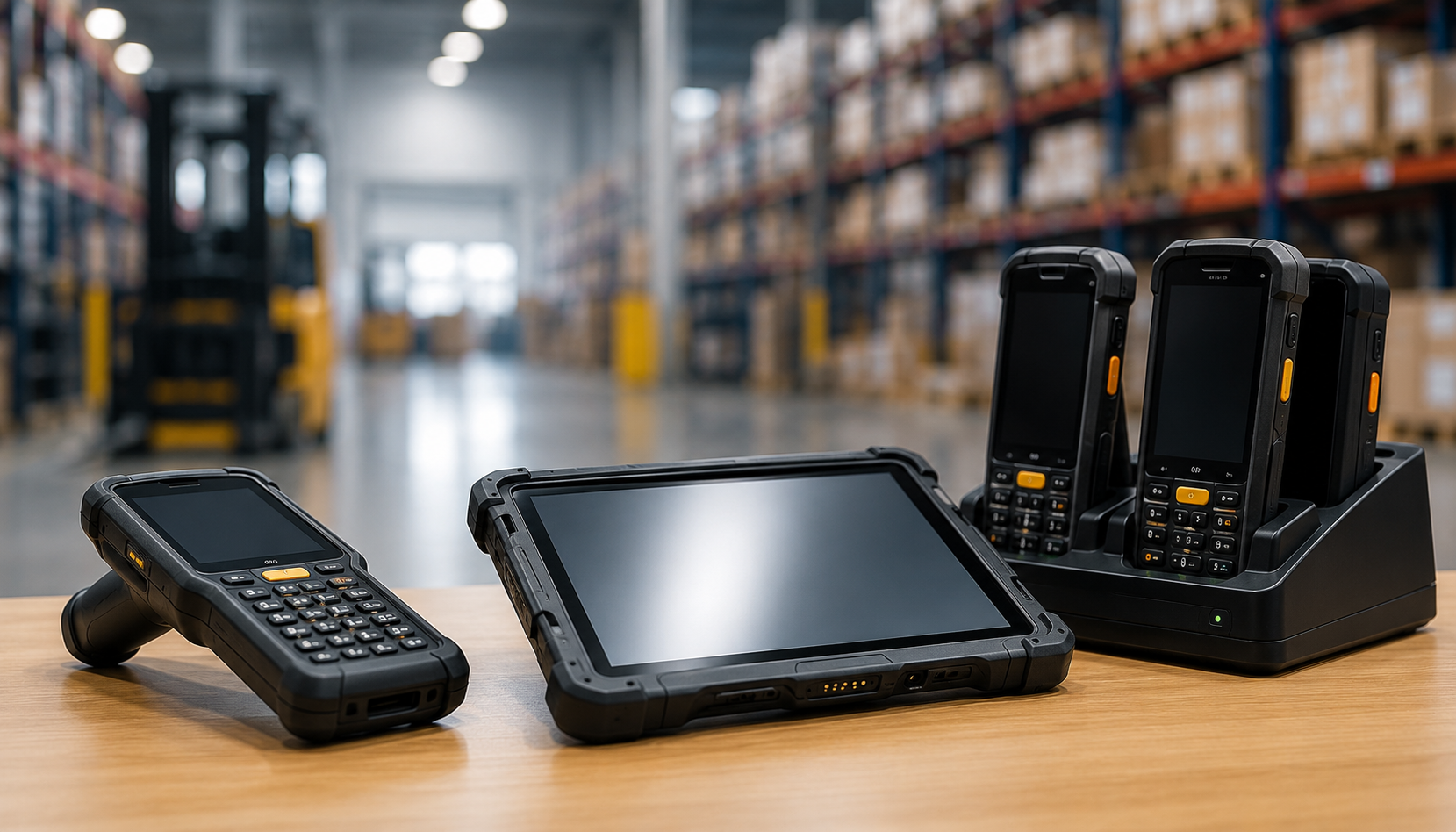
Walk into almost any warehouse and you'll see millions of dollars invested in warehouse management systems (WMS), rugged mobile computers, automation, robotics, RFID, AI-powered vision systems, and high-speed conveyors.
Yet there's one piece of technology that quietly determines whether all of those investments succeed or fail.
The industrial thermal printer.
When a barcode doesn't scan, most people instinctively blame the scanner. In reality, the problem usually started several steps earlier.
It started with the printer.
A barcode that fails to scan slows receiving, interrupts picking, delays shipping, frustrates employees, and creates costly manual workarounds. In today's supply chain, poor print quality isn't just an inconvenience—it can impact productivity, compliance, customer satisfaction, and even your bottom line.
Every Warehouse Workflow Begins with a Printed Label
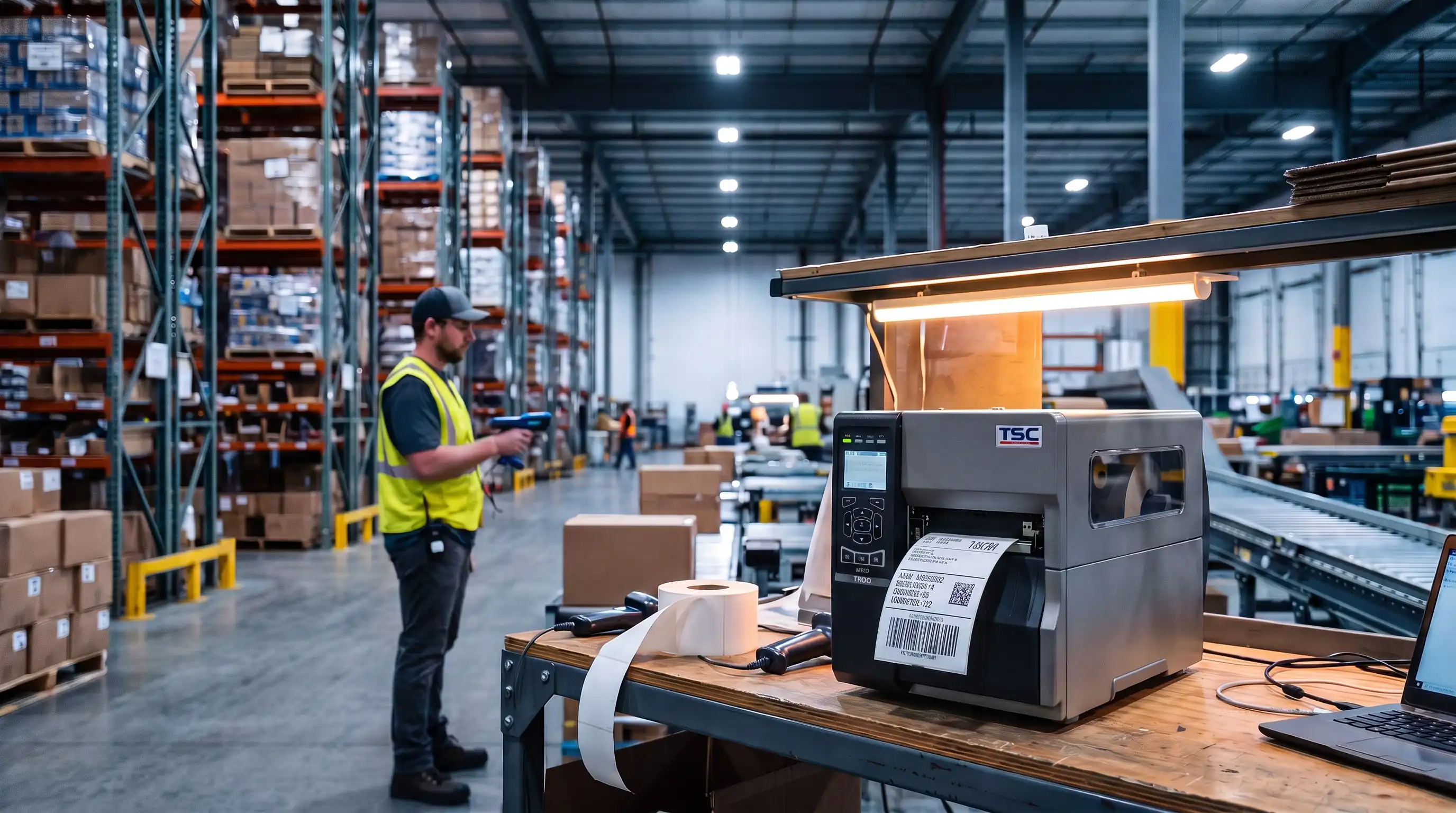
Industrial printers don't simply print labels. They create the digital identity that drives nearly every movement throughout your operation. That barcode printed today will likely be scanned multiple times before the product reaches its final destination.
It may be scanned during:
- Receiving
- Put-away
- Inventory transactions
- Replenishment
- Picking
- Packing
- Shipping
- Carrier handoff
- Customer receiving
- Returns processing
Every one of those touchpoints depends on a single assumption: The barcode was printed correctly the first time.
If it wasn't, every downstream process would become slower, more expensive, and more prone to errors. The irony is that organizations routinely invest thousands or even hundreds of thousands of dollars upgrading handheld computers while continuing to print labels on aging printers with worn printheads, inconsistent darkness settings, and declining print quality.
Even the most advanced mobile computer can't read a barcode that was never printed properly.
The Hidden Costs of Poor Barcode Quality
When barcode quality begins to decline, the effects rarely show up as one major failure. Instead, they appear as dozens of small inefficiencies that quietly drain productivity every day.
A worker scans. Nothing happens. They rotate the label. Scan again. Still nothing.
Eventually they key the informationin manually. Twenty seconds doesn't seem like much. Multiply that across hundreds or thousands of failed scans each week, and you've created hours of lost productivity, unnecessary labor costs, shipping delays, and frustratedemployees.
Poor barcode quality often results in:
- Manual data entry
- Increased picking and shipping errors
- Reprinting labels
- Production delays
- Additional IT support requests
- Reduced warehouse throughput
- Lower employee productivity
- Customer receiving issues
- Inventory inaccuracies
These costs rarely appear under"printer expenses." Instead, they show up throughout your operation.
Why So Many Companies Wait Too Long to Replace Their Printers
Industrial thermal printers are incredibly durable. Many organizations continue operating printers that are seven, ten, or even fifteen years old. And on the surface, they appear to be working just fine.
Until they're not.
Over time, printheads wear. Rollers deteriorate. Sensors drift out of calibration. Labels become inconsistent. Operators compensate by increasing darkness settings or slowing print speeds. Maintenance becomes more frequent. Eventually, employees begin avoiding certain printers because "those labels never scan."
The printer hasn't completely failed.
It's simply producing labels that no longer meet the demands of today's automated supply chain.
Barcode Quality Is No Longer Just an Operations Issue — It's a Compliance Issue
For manufacturers and suppliers shipping into major retailers, distributors, healthcare organizations, and transportation networks, barcode quality has become far more than an internal productivity concern.
It has become a compliance requirement.
Retailers such as Walmart, Target, Costco, Amazon, The Home Depot, Lowe's, Dick's and many grocery chains continue investing heavily in supply chain automation. Their receiving operations depend on fast, accurate barcode scanning to keep products moving. When labels fail to scan, someone pays for the delay. Increasingly, that someone is the supplier.
Programs such as Walmart's Supplier Quality Excellence Program (SQEP) have raised awareness around supplier performance and operational excellence. While retailer requirements continue to evolve, the direction is clear: organizations are expected to ship products that move efficiently through increasingly automated supply chains.
Unreadable or poor-quality barcodescan contribute to:
- Supplier chargebacks
- Manual receiving fees
- Compliance deductions
- Shipment delays
- Receiving exceptions
- Additional inspections
- Lower supplier performance scores
It's no coincidence that many organizations begin researching barcode verification, ANSI barcode grading, or Walmart SQEP barcode requirements only after they receive costly chargebacks or compliance notices.
By then, the printer has already become a very expensive problem.
Printing a Barcode That "Looks Good" Isn't Enough
A barcode may appear perfectly readable to the human eye while still failing to meet ANSI or ISO quality standards. That's why more organizations are moving beyond visual inspection and implementing inline barcode verification.
Instead of assuming every barcode is readable, barcode verification systems grade each barcode as it's printed, ensuring it meets defined quality thresholds before the label ever leaves the printer.
This dramatically reduces the risk of shipping unreadable labels into the supply chain.
Solutions such as Printronix AutoID's Online Data Validator (ODV) technology and Brady's integrated barcode verification capabilities help manufacturers identify poor-quality labels immediately. Not after they've been applied to products, loaded onto trailers, or rejected by a customer.
Instead of discovering barcode issues at receiving, organizations can prevent them at the source.
Modern Industrial Printers Have Become Intelligent Platforms
Industrial printing has evolved significantly over the last decade. Today's enterprise-class printers do much more than produce labels.
They can provide:
- Centralized fleet management
- Remote configuration and monitoring
- Printhead health monitoring
- Security enhancements
- RFID encoding
- Cloud connectivity
- Predictive maintenance alerts
- Enterprise management integration
- Barcode verification
- High-speed industrial performance
Rather than waiting for printers to fail, organizations can proactively monitor printer health across multiple facilities while maintaining consistent print quality throughout the enterprise.
Choosing the Right Printing Strategy
Selecting an industrial printer is no longer simply a matter of print speed or label volume.
Organizations should evaluate:
- Barcode quality requirements
- Compliance obligations
- Retail customer expectations
- Environmental conditions
- Fleet management capabilities
- Existing WMS and ERP integration
- Future RFID initiatives
- Verification requirements
- Long-term serviceability
The right solution may include integrated barcode verification, centralized device management, rugged industrial construction, or specialized media designed for demanding environments.
The goal isn't simply to buy a better printer. It's to create a more reliable workflow.
The Hardesty Difference
At Hardesty Technologies, we believe thermal printing is one of the most overlooked technologies in the warehouse.
Our team works with organizations to evaluate aging printer fleets, improve barcode quality, reduce compliance risks, and modernize labeling environments with solutions from leading manufacturers including Brady, TSC, and Printronix Auto ID.
Whether you're experiencing failed scans, retailer chargebacks, barcode quality issues, or simply preparing for the next generation of warehouse automation, we'll help you identify the right solution for your operation, not just the next printer.
Final Thoughts
Warehouse technology continues to evolve at an incredible pace. Artificial intelligence, automation, RFID, robotics, and real-time visibility are transforming how products move through the supply chain.
Yet every one of those technologies still depends on something remarkably simple: A barcode that scans the first time.
Industrial thermal printers aren't just printing labels. They're creating the foundation upon which every inventory transaction, shipment, compliance requirement, and customer experience is built.
Because the most expensive barcode in your warehouse isn't the one that costs a few cents to print.
It's the one that doesn't scan.
Email our team today to get started: Sales@hardestytech.com
About the Author
Joe Leucht is Director of Commercial Strategy at Hardesty Technologies and an 18-year veteran of warehouse and supply chain technology. His experience spans barcode, RFID, mobile computing, wireless connectivity, warehouse technology, managed services and lifecycle strategy. At Hardesty Technologies, Joe works with organizations to connect technology investments to real-world operational challenges — helping distribution and logistics teams improve visibility, productivity, accuracy and the reliability of the systems their operations depend on.
His perspective is grounded in the belief that technology should solve operational problems, not simply add another layer of complexity.